Open • Browser-based • Algorithm-independent

Independent Visual List Curation for Everyone

MyAnythingList turns trusted human-curated links into big visual grids: for memory care, civic media, research discovery, classrooms, public-interest journalism, and anyone who wants to escape the algorithmic maze without giving up the web.

A global network of researchers, journalists, caregivers, and citizens using visual link grids
The universal idea is simple: a person, family, lab, classroom, newsroom, or community chooses trusted sources — then the browser displays them as a clear visual map.
The shift

From feeds to intentional maps

Most platforms present information as an endlessly changing feed. That can be useful, but it also creates dependency on ranking systems, recommendation engines, advertising incentives, and opaque visibility decisions.

MyAnythingList proposes a complementary model: algorithm-independent visual lists. A curator chooses the sources. A cron job can update the newest items. A static browser page presents the result. The user sees recognizable choices instead of a maze.
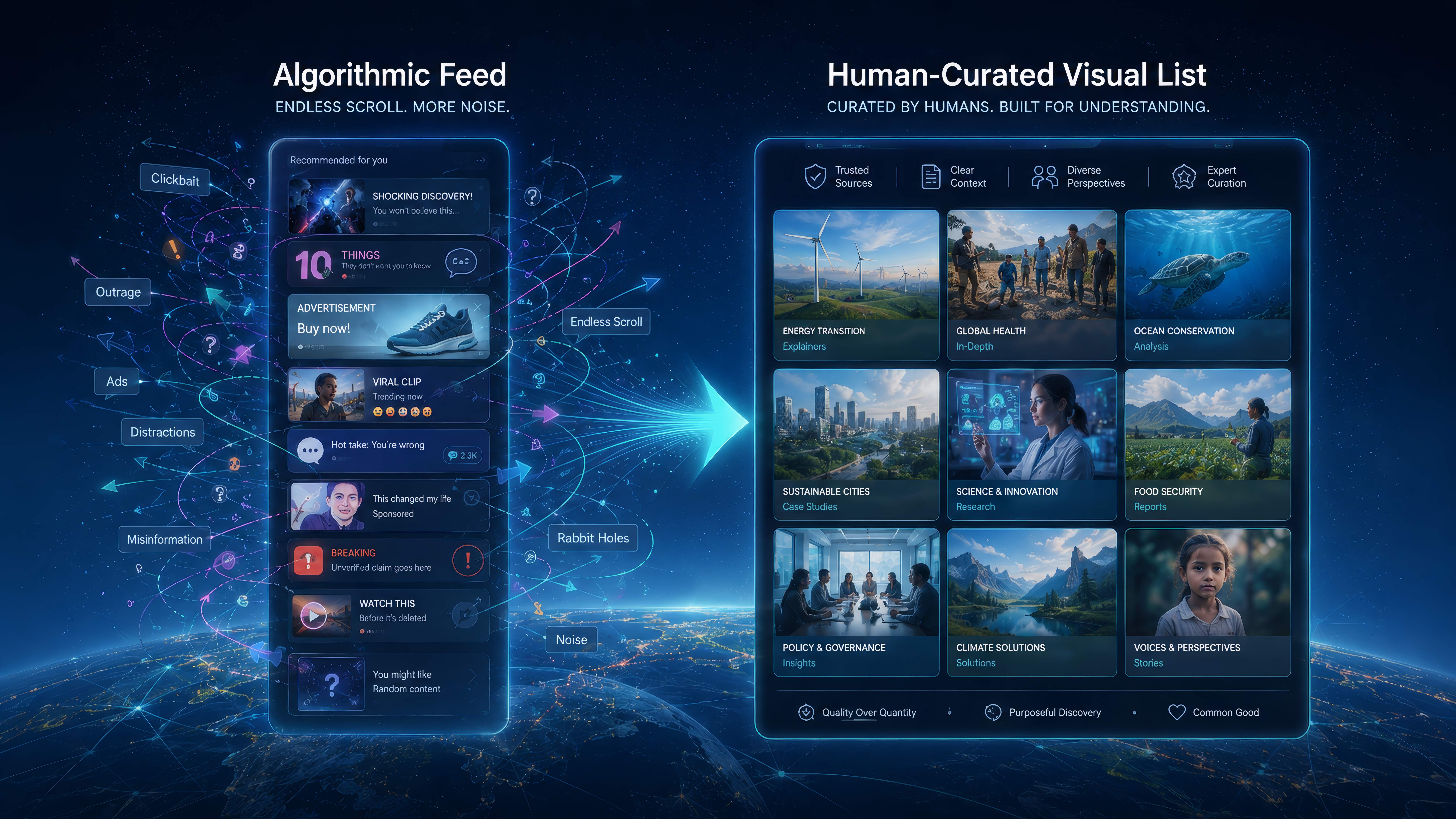
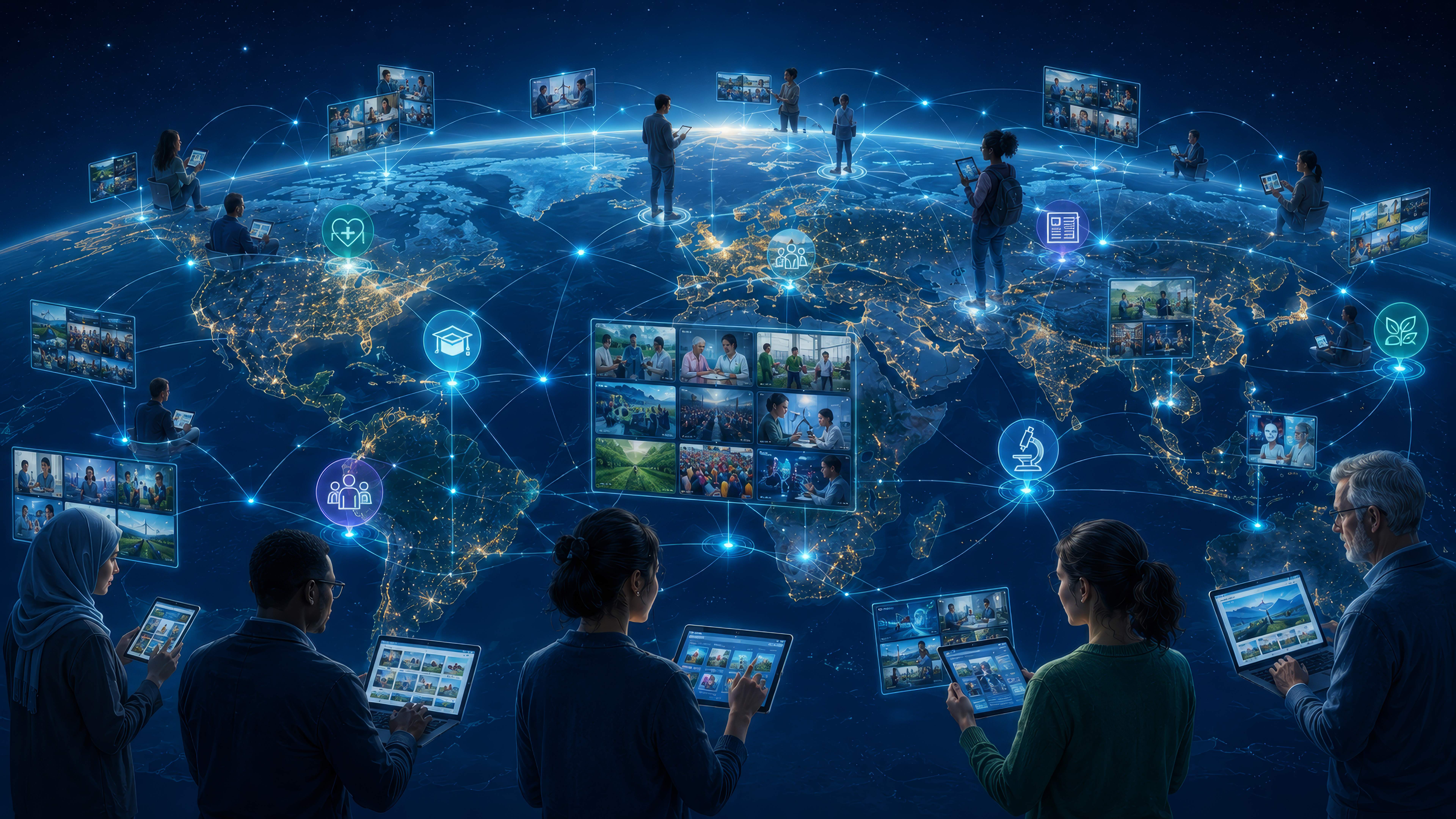
Diagram comparing algorithmic feed to human-curated visual list
Human selectedTrusted people define the list, not a black box.
Browser nativeNo app store required for demos, kiosks, labs, classrooms, or care rooms.
Static outputPublic pages can be simple HTML/TXT/SVG generated by cron.
Accessible firstLarge thumbnails, readable titles, and repeatable locations reduce cognitive load.
Worldwide independent visual list curators connected across a global map
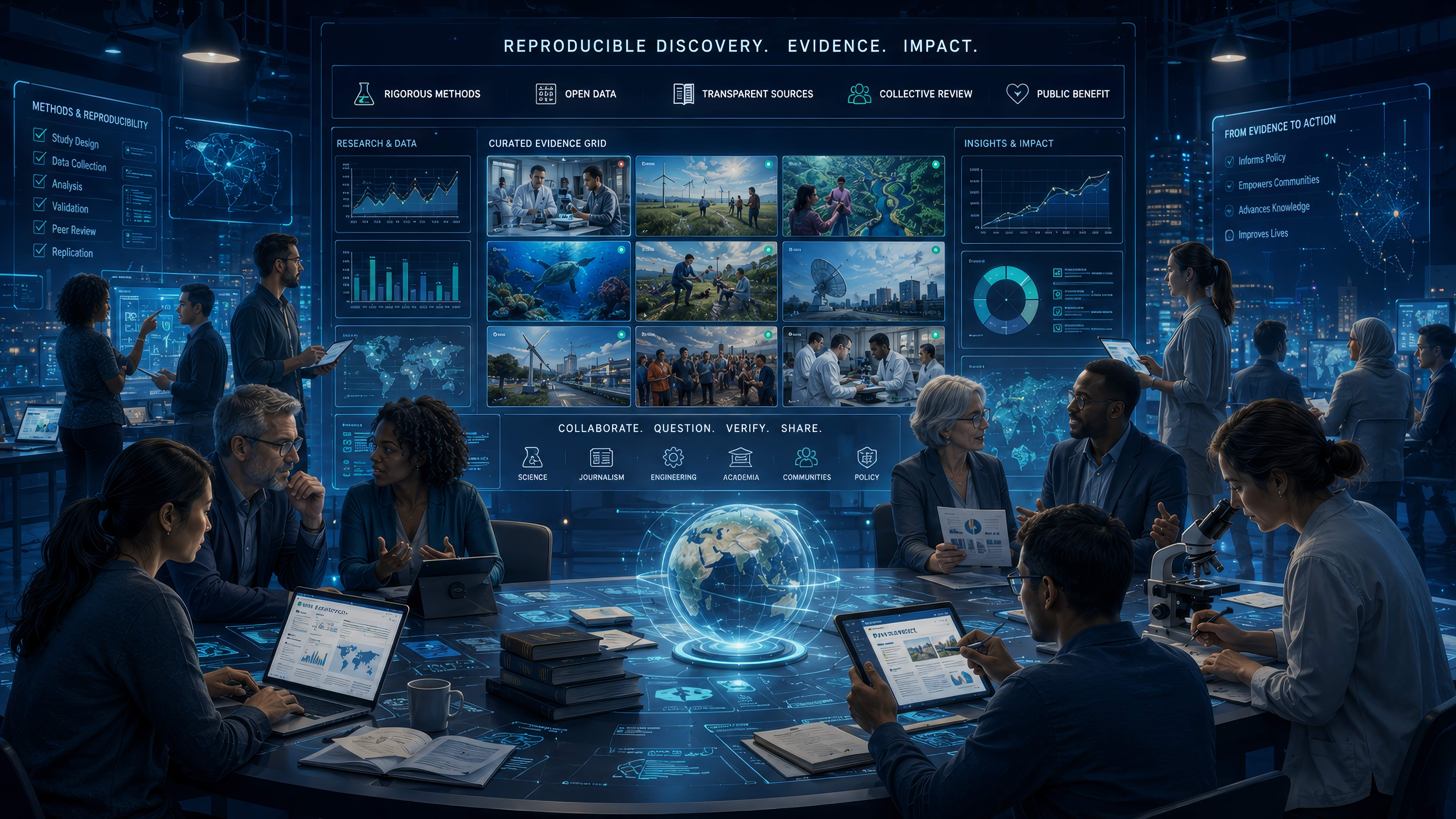
Scientists, journalists, engineers, and researchers collaborating around a visual grid
For smart truth seekers

Scientists, academics, engineers, journalists, and researchers need reproducible discovery surfaces

A search result is not the same thing as a maintained source map. A social feed is not the same thing as a research bibliography. A recommendation stream is not the same thing as a lab notebook, public archive, or civic reading room.

Visual lists can become a reproducible discovery surface: a shared, inspectable, updateable map of channels, papers, videos, datasets, lectures, explainers, and public records.

ResearchersTrack labs, journals, talks, datasets, and reproducible methods.
JournalistsCurate beat-specific evidence, channels, briefings, and source material.
EngineersBuild dashboards for specs, docs, changelogs, tutorials, and demos.
EducatorsTurn readings and videos into visual course maps and kiosk displays.
Demo stack

Five immediate public demos

These demos show the same core architecture serving different communities: memory care, family media, trusted civic news, calm YouTube Premium viewing, and facility room support.

CAREMemory Care TVOne icon per intention.
FAMILYMom’s Favorite ShowsFamiliar content without menu relearning.
CIVICTruth & Justice TVTrusted public-interest media without algorithm dependence.
CALMYouTube Premium ViewingCurated links with fewer YouTube-served interruptions.
ROOMFacility Room TVBrowser-based care-room controls and media access.
OPENIndependent CuratorsAnyone can publish a visual list from trusted sources.

Truth & Justice TV

A cron-updated, algorithm-independent civic media grid for people who want direct access to trusted democracy, legal, public-interest, and liberal news sources without depending on recommendation feeds.

/beta/care-tv/truth-justice/ /beta/care-tv/msnbc-latest/ /beta/care-tv/democracy-now-latest/ /beta/care-tv/meidastouch-latest/ /beta/care-tv/legal-af-latest/
Truth and Justice TV visual grid demo
Open-source architecture

Static public pages, private update logic

The public side can be just HTML, TXT, JSON, and SVG. The private side can run a cron job that reads trusted rules, fetches updates, generates beautiful cards, and publishes locked local directories.

1Rules
2Cron
3Fetch
4Generate
5Publish

Example output

public/care-tv/ index.html truth-justice/ index.html playlist.txt tile-data.json assets/cards/ msnbc-latest.svg democracy-now-latest.svg turn-tv-off.svg
Global map of independent visual list curators
The larger vision

Lots of happy independent list curators everywhere on planet Earth

The same system can support civic media, research maps, local community updates, family video walls, memory-care rooms, classrooms, faith services, artist showcases, engineering documentation, and public-interest archives.

This is not about replacing the open web. It is about making the open web navigable again for real people, real communities, and real missions.

Build your own visual list

Choose trusted sources. Publish a grid. Share a stable browser URL. Help people find what matters without forcing them through an algorithmic maze.