One old waiter photo became a map of a life, a technical career, an AI experiment, and an accessibility requirement.
This version goes beyond “here are some images.” The source photo, the later AI transformations, the fictional HeyGen avatar, the video, the playlist, the video title, the description/comments, and Ken’s present-day explanation all belong to one connected record.
The real starting point: Ken as a young waiter in Key West
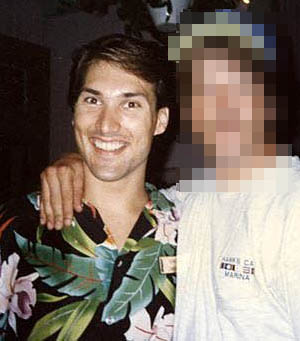
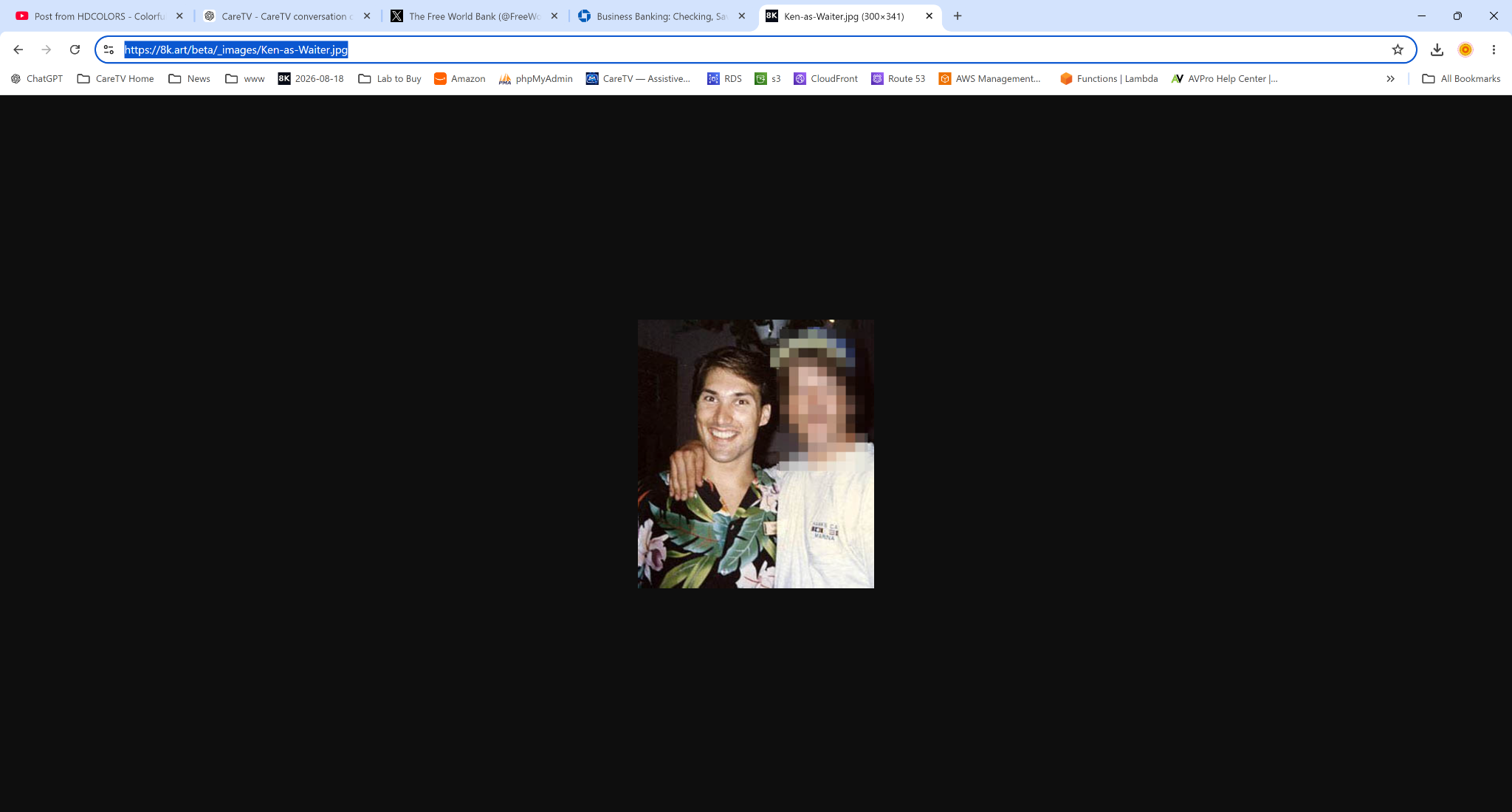
https://8k.art/beta/_images/Ken-as-Waiter.jpg
Ken remembers that people sometimes used the “Barbie and Ken” association to remember his name. The irony is important: other people had an easy mnemonic for him, while he describes having great difficulty remembering other people’s names and faces once they were outside the context in which he knew them.
From restaurant work to INFOCALL: an early version of the same design instinct
Ken describes being hired from that waiter job by INFOCALL in the early 1990s. He became Technical Director and worked with Macromedia Authorware on early Windows systems. INFOCALL built standing airport telephone/kiosk systems intended to connect travelers with food, transportation and hotels.
The continuity with today’s CareTV work is striking: the technology is completely different, but the design problem is similar. Hide technical complexity and expose a simple human intention. In the airport kiosk era the intention might have been “hotel” or “transportation.” Today it is “show the front door,” “call Grandma,” “what did I say an hour ago?” or “publish this.”
The same historical photo became raw material for modern AI media
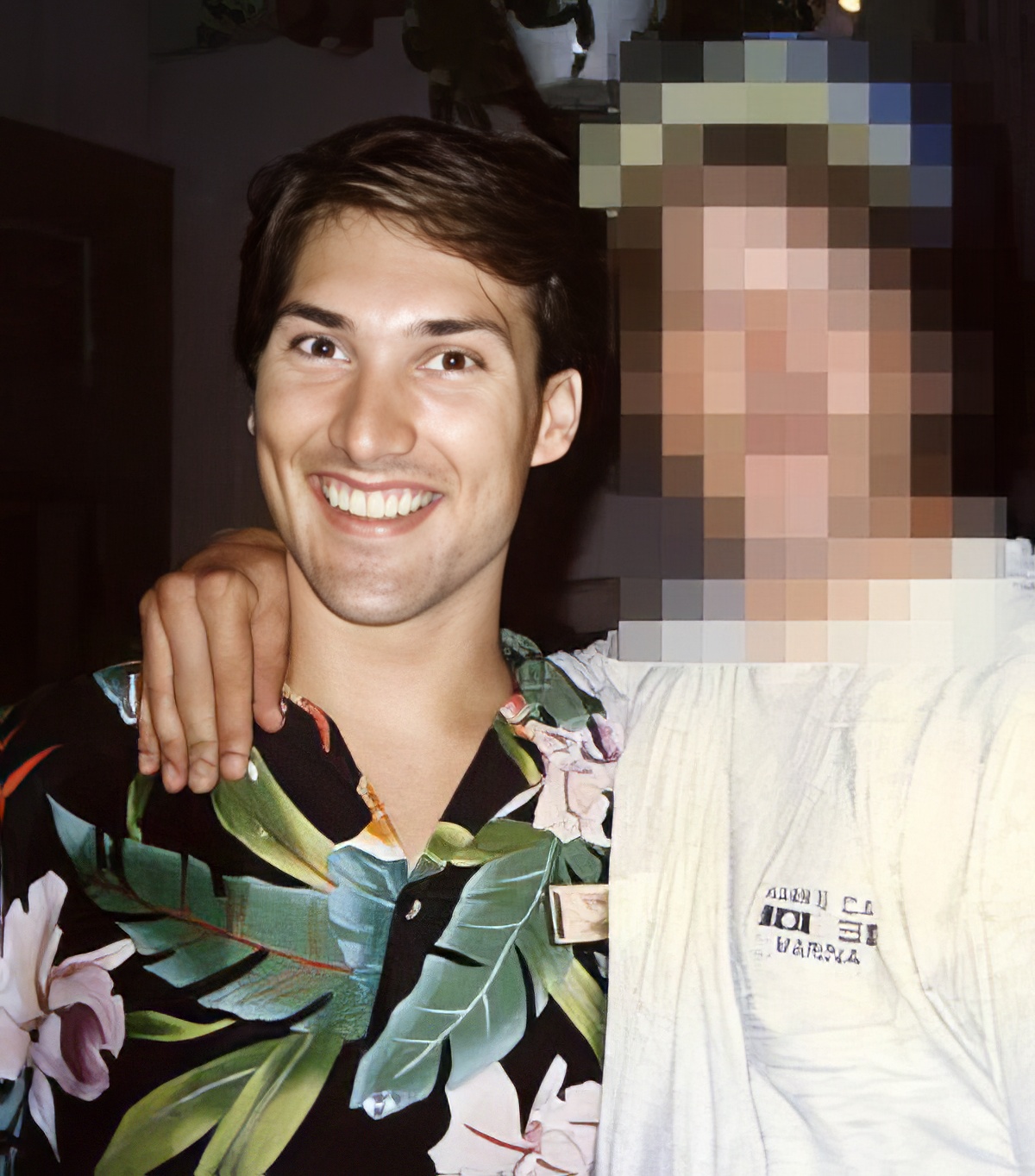
https://8k.art/beta/_images/Ken-as-Waiter-2.jpg

https://8k.art/beta/_images/Fictional-Ken-as-Waiter-AI-Avatar.png
Friendly context: This is the fictional avatar video Ken supplied as part of the same story. The video is important not merely as an animation, but because it places a synthetic “alternate reality” version of his younger self inside a public autobiographical archive.
https://8k.art/beta/_images/Fictional-Ken-as-Waiter-AI-Avatar-Video.mp4
YouTube is part of the artifact, not just a place where the MP4 happens to live
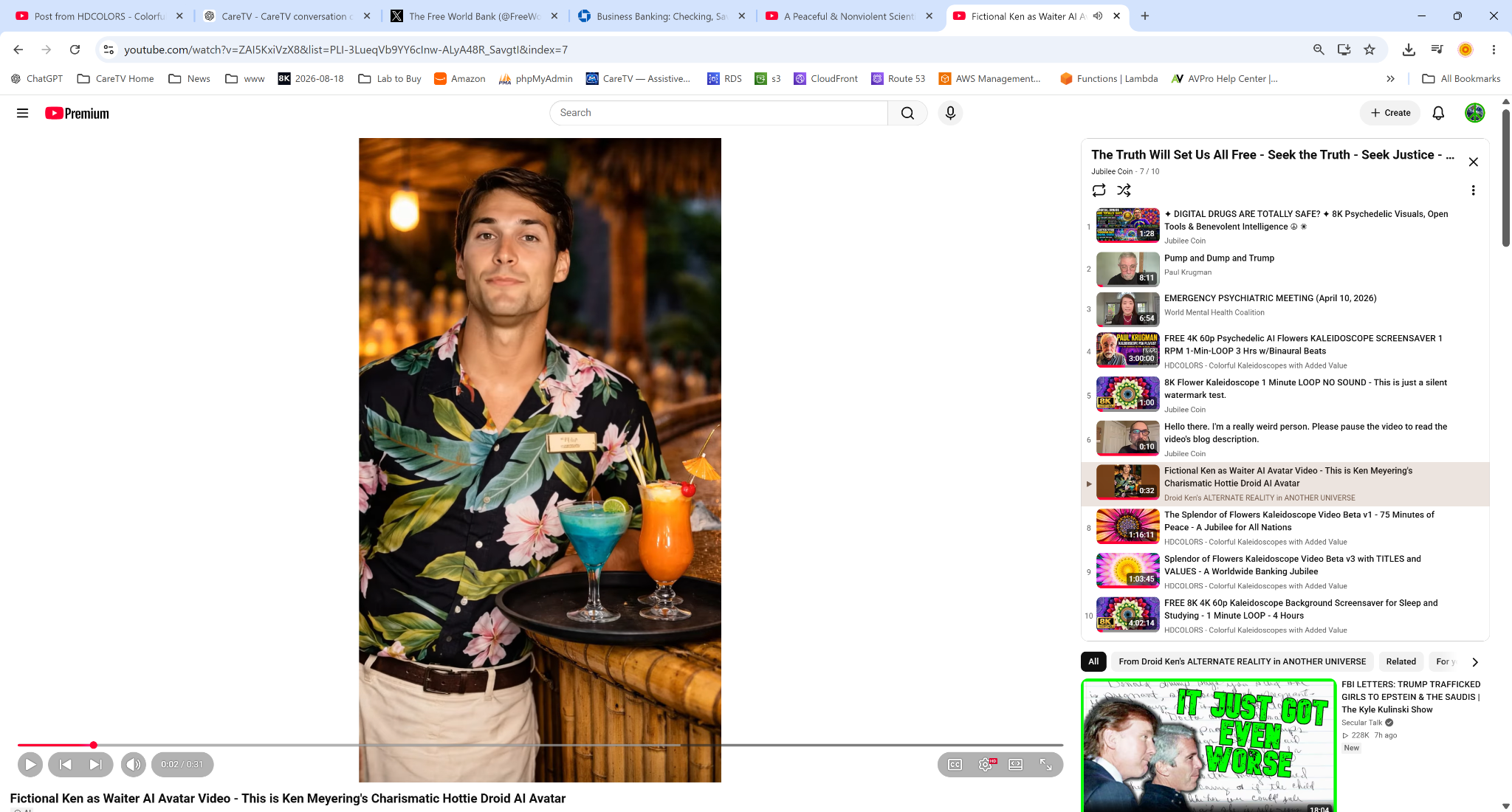
The visible video title is:
The visible channel/identity framing under that playlist item is:
The visible playlist title begins:
Those labels matter. They tell the reader that the synthetic avatar is being framed as fiction/alternate reality rather than quietly passed off as historical documentary footage.
Exact video and playlist URL
https://www.youtube.com/watch?v=ZAI5KxiVzX8&list=PLI-3LueqVb9YY6cInw-ALyA48R_SavgtI
Exact playlist embed
That limitation is itself part of the design requirement: a proper personal archive should ingest the video, title, description, comments, playlist membership, timestamps, thumbnails, captions and local commentary as one related object rather than forcing a person to remember which parts lived only inside a platform UI.
This is also a disability story about context-dependent memory
Ken says that even when he was young, he had difficulty forming friendships partly because he could not reliably remember names and faces outside their original context. That makes this historical photo unusually relevant to today’s CareTV project: the same person who once worked in a high-social-contact restaurant environment now describes building a machine-assisted external memory because context can disappear faster than he can preserve it.
The waiter photo therefore connects several decades:
- social memory difficulty when young;
- technical work at INFOCALL building simplified information interfaces;
- decades of PC and multimedia experience;
- modern AI image restoration and avatar generation;
- YouTube as a public autobiographical archive;
- CareTV’s current 24/7 audio/video/transcript indexing goal.
What YouTube is visibly permitting here
As shown in the supplied YouTube screenshot, the fictional avatar video is being hosted and presented inside Ken’s public playlist with an explicit fictional/alternate-reality framing. That does not mean YouTube has endorsed every idea expressed in the video, description or comments. It does mean the platform is currently carrying the work as part of the public archive visible in the supplied screen.
That distinction matters. The interesting point is not “YouTube agrees with Ken.” The interesting point is that a mainstream platform can host autobiographical material that deliberately mixes real history, synthetic media, speculative fiction, political commentary and technical experimentation—as long as the reader is given enough context to understand what kind of thing they are seeing.
Why the assistant’s previous standalone-image response was such a serious miss
The assistant saw a rich chain of historical evidence, AI transformations, video, playlist context and autobiographical explanation—and reduced the response to one newly generated portrait.
The generated portrait was not inherently the problem. The problem was severing it from the original photo, exact URLs, video, playlist, comments/description context and the user’s explanation of why those things matter.

Permanent CareTV / 8k.art archival rule
For every externally hosted media object: preserve the original URL visibly; ingest the media when authorized; preserve title, description, captions, comments, playlist/collection membership, timestamps and surrounding conversation; distinguish source material from AI enhancement and fiction; and attach friendly explanatory context.
That is what “AI-indexed external memory” means in practice. It is not just OCR, transcription or file storage. It is preservation of relationships.