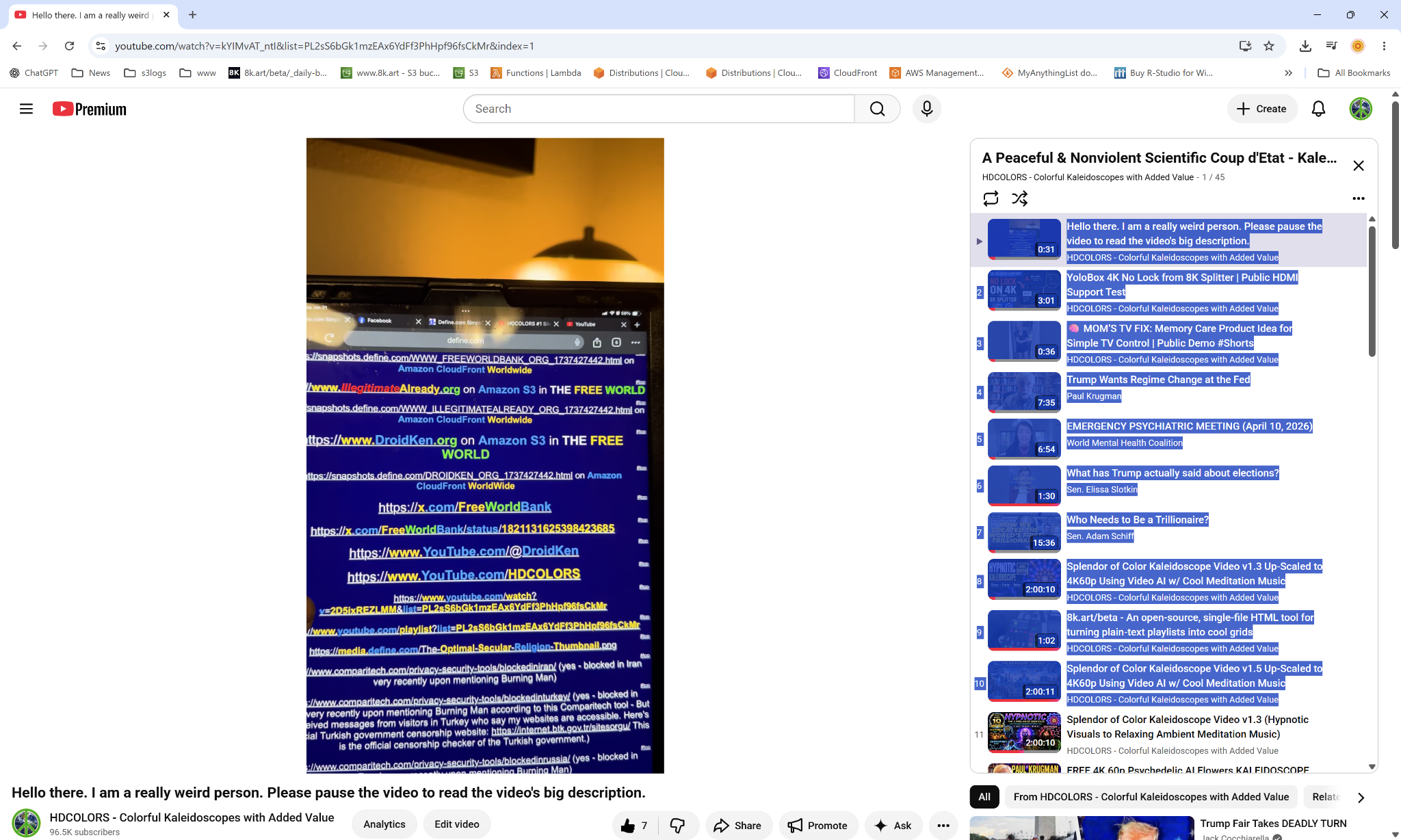
Source Screenshot
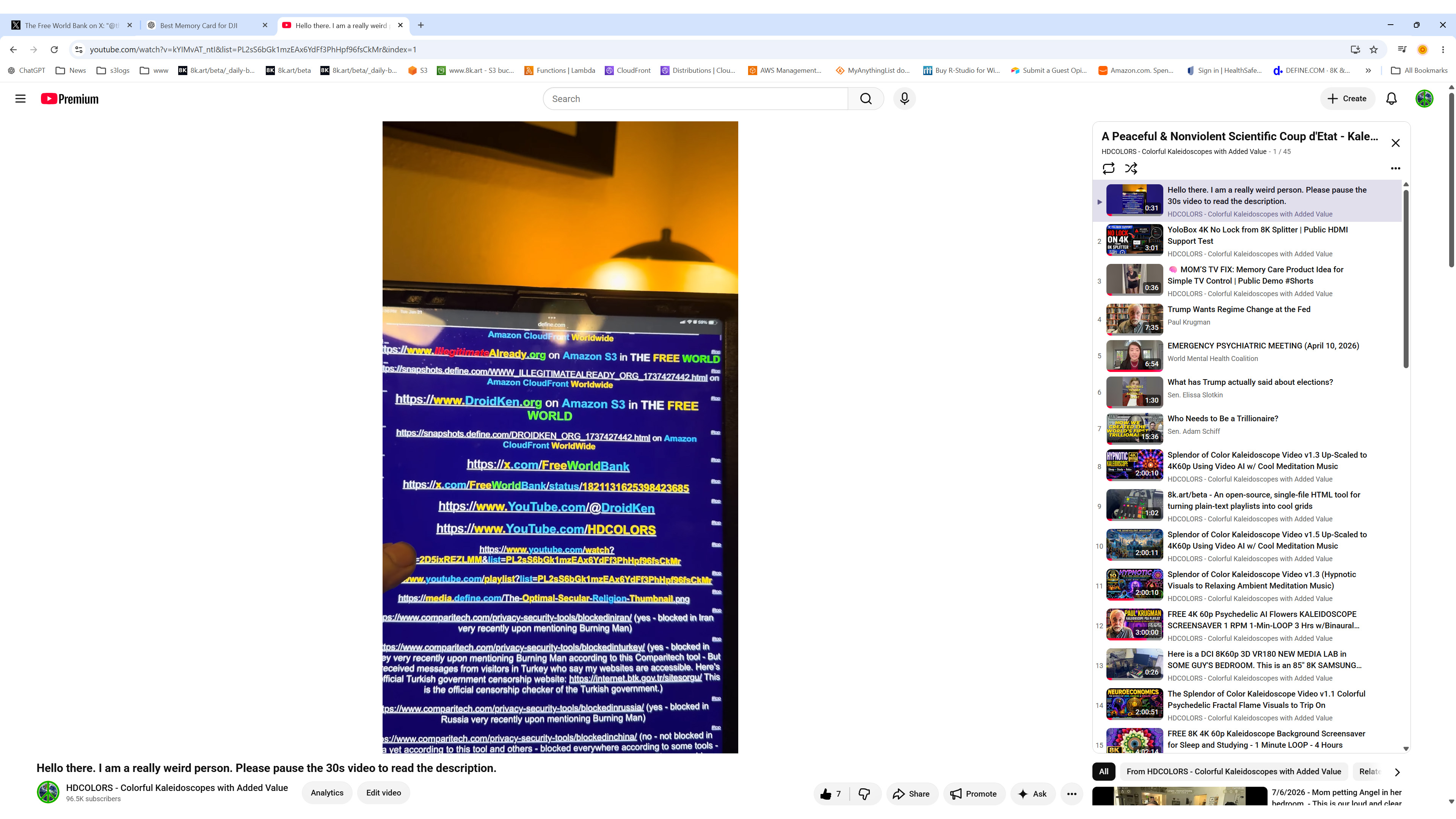
This single video frame functions as a public evidence directory. It contains primary domains, archived snapshot links, social-media identity links, YouTube channel and playlist links, media-asset links, and censorship-testing tools. The intelligence value is not any one link alone; it is the architecture. The frame shows an attempt to preserve public records across multiple platforms, make the record manually recoverable from the video itself, and test whether the material can be reached from politically restricted environments.
Master Executive Summary
This package analyzes a single still frame from a July 4, 2026 YouTube Short. The frame functions as a public evidence directory rather than a normal thumbnail or title card. It contains primary domains, archived snapshot links, social-media identity links, YouTube channel and playlist links, media assets, and censorship-testing tools.
The educational value is the architecture: the still frame attempts to make a public record recoverable even if YouTube descriptions are hard to click, mobile interfaces bury links, platform moderation interferes, or social-media accounts become inaccessible. The frame is also a redundancy strategy: it points to static websites, timestamped snapshots, public channels, social posts, and tools for checking international blocking.
The core lesson is that a video can become an evidence index. When links are embedded inside the video image itself, the viewer can pause, zoom, transcribe, and recover the public record even if the platform interface treats links poorly. This is not an ideal accessibility experience, but it is a meaningful survival strategy for public-interest documentation.
Evidence strategy:
Embed important URLs inside the video image so the record can be recovered even when platform descriptions or mobile interfaces are poor.
Archive strategy:
Use static domains and timestamped snapshot URLs to reduce dependence on one live platform or one mutable page.
Accessibility issue:
Manual transcription from a video frame is not ideal, but it can preserve reachability when clickable links are hidden, blocked, or degraded.
Public-interest value:
The frame links civic claims, media evidence, social identity, playlist structure, and international censorship checking into one recoverable map.
Educational Lessons
A video frame can be an index.
When a frame contains stable URLs, it becomes more than visual decoration. It becomes a manual recovery layer for the public record.
Redundancy is preservation.
Primary domains, snapshots, social links, media links, and playlist links together make the record harder to erase accidentally or procedurally.
Clickable links are not enough.
If platform interfaces make links hard to tap, copy, or trust, visual link embedding becomes a rough but useful backup.
Censorship testing is part of access analysis.
Links to tools checking Iran, Turkey, and Russia show concern with whether the record can be reached across national filtering systems.